
Hi, Nate Taylor here. Please reach out to me at nate@sscycleworks.com for inquiries on parts availabilities and shipping estimates.
South Salem Cycleworks Museum:
Owner Michael Wolfe’s 1993 63cm Miyata Team Bike - A Tribute to the Former Slant Parallelogram Patent Holder
Owner Michael Wolfe’s 1993 63cm Miyata Team Bike
The frameset:
- Made with Miyata Splined-Triple-Butted cro-moly tubing.
- Oversized top tube
- American paint
- Pump peg, chain hanger and race number braze-on.
- 63 cm center-to-center, 60 cm top tube
- 19 cm head tube
- 41cm chainstay
- 101 cm wheelbase
- 7 cm BB drop
- Fork 1” threaded steel steerer, APA bonded aluminum blades
- 22 lbs weight with pump, pedals.
- Serial# YC35710 63
Components mounted on the framest:
- Avocet Air 40R 02 Ti rail saddle
- SunTour Superbe Pro seatpost
- SunTour Superbe Pro 8-speed downtube shifters
- SunTour Superbe Pro braze-on front derailleur
- SunTour Superbe Pro square taper 172.5mm/39/53 crankset.
- SunTour Superbe Pro bottom bracket
- Time Titan Mag pedals (Magnesium bodies & titanium spindles)
- SunTour Superbe Pro chain
- SunTour Superbe Pro cartridge-bearing derailleur pulley wheels
- SunTour Superbe Pro 8-speed 12-21 cassette
- SunTour Superbe Pro hidden spring brake calipers
- Superbe Pro cartridge-bearing 32-hole front hub,
- Mavic Reflex French Blue 32h front rim
- Front wheel built with DT Revolution 15/17/15 spokes with DT 7005 alloy nipples, radial build.
- SunTour Superbe Pro cartridge-bearing 32h rear hub
- Mavic Reflex French Blue 32h rear rim
- Rear wheel built with DT Revolution 14/17/14 spokes driveside, cross-3; 15/17/15 spokes non-driveside, DT 7005 alloy nipples, Cross-2
- Control Tech Titanium skewers
- Rox rim strips
- Michelin Airstop threadless tubes
- Veredestein Fortezza TriComp 700 x 23 tires
- SunTour Superbe Pro 1” threaded headset
- 3T Synthesis 13cm stem
- Modolo 8X Extenos handlebar, 44cm center-to-center.
- Cinelli Cork handlebar wrap
- Avocet 50 Altimeter
- American Classic water bottle cages
- Silca Impero frame pump with Campagnolo steel head
- Specialized seatbag
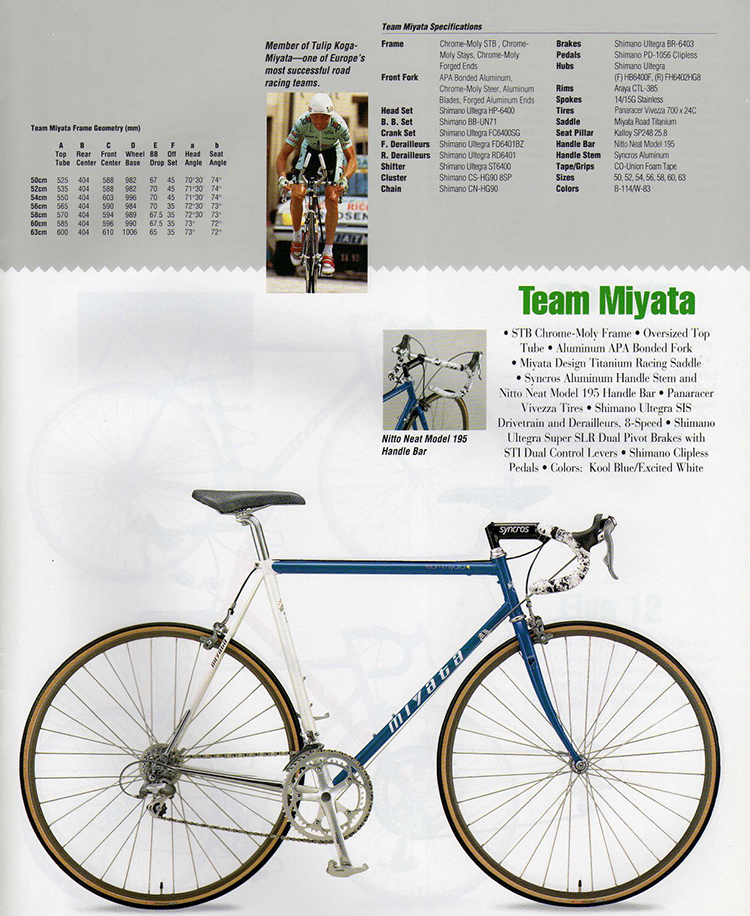
From the 1993 Miyata catalog.
About the bike:
In 1993, I’d gone to the bicycle trade show in Anaheim, eager to see what was new and to place pre-season orders with our vendors. The lineup from Miyata showed retail prices that were well above their competitors, and I was more than hesitant to place a pre-season. I was relieved to find they’d adjusted their prices before leaving the show.
By the spring of ’94, they began consolidating their warehouses to a central location in Utah and were posting closeout pricing.
I bought a ’93 Miyata Team frameset at this time. I’d wanted a bike for sunny day commutes, where I might ride 25-30 miles on the way to work, but fly straight home through town to return home. I was frustrated that the headtube and steerer tube of the fork dimensions would not allow the use of a Campagnolo Super Record headset, being 2-3mm short. Without thinking, I faced both the top and bottom of the head tube, attempting to reach the dimension needed for the Super Record headset. Couldn’t do it, and realized that I’d altered the angle of the head tube by shaving the lower end so much.
I was fortunate, as I’d enjoyed a good relationship with Glenna at the central distribution location in Illinois, and she allowed me to return it, sending another!
I built the frameset with parts I’d accumulated over the years, a Campagnolo Nuovo Record crankset, Simplex retrofriction shifters, Specialized cartridge-bearing hubs with Specialized Saturae rims, etc., etc..
Returning home from the shop in the dark on busy arterials like Commercial Street had hazards besides the infrequent hassling from asinine motorists. I was crossing an intersection and without any warning my rear wheel locked up against the frame. I managed to unclip and avoid crashing, but the wheel was completely pretzeled. Something had entered and exited the sidewall of the tire, but not preventing the object from piercing the rim itself, leaving a hole. I briefly did a search in the intersection looking for the culprit, but my lighting system didn’t reveal anything. I had to walk three blocks in my Time TBT cleats carrying the bike to get to a business that was still open to call my wife to retrieve me. This was well before I carried a phone of any sort. I checked the intersection on the way to work next day in the daylight, but again failed to find anything. It might have wandered off stuck in some vehicle’s tire.
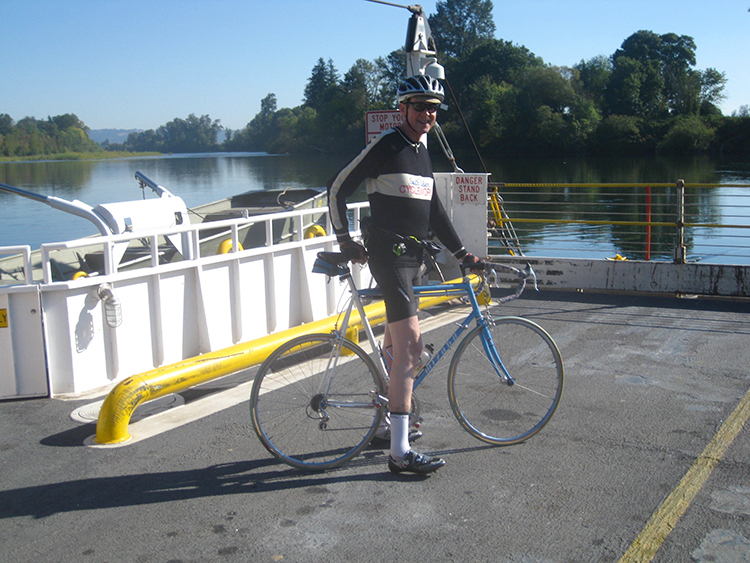
Here I am with the bike on the Buena Vista ferry, crossing the Willamette River.
We were selling NiteRider product at the time, and I had the best they offered, the Digital Pro 12. Returning home one night, down Commercial Street, I was passed by a vehicle, but had caught up with it as the stop signal at Rural Avenue had slowed traffic down. I was still moving, but didn’t attempt to speed up and pass the traffic. But when I reached the other side of the intersection, the car that had passed me seconds before, suddenly turned right into the Dunkin’ Donuts parking lot! Even with my full 32 watts of light intensity, he’d forgotten me!
I didn’t have time to do anything other than turn into the parking lot, impact his rear quarter panel and slide up the side of the now-stopped car before falling over sideways after leaving the front of the car and sliding some 15-20 feet. I’d started carrying pepper spray obtained from a customer who was a prison guard, and it flattened. I don’t remember the odor, but lay there until the paramedics arrived.
I collected witness contacts, and the driver, who was joining the military the next morning, was sincerely apologetic, and had insurance. My clothing was ripped here and there, but I seemed to be okay. The bike, well, the new paint was scuffed here and there, and the left crankarm had encountered the chainstay, though both appeared to still be straight.
I used the insurance money to pay for repainting the frameset by Paul Schwyhart of Painting Specialties in Eugene, whom I knew from my living there a decade ago. He’d painted frames for Bruce Gordon among others. I gave him a 1993 Miyata catalog for reference, as I wanted it painted as it was originally, other than having a blue pearl top coat.
While it was there, SunTour closed shop, and put their inventory here in North America at reduced prices. They had a final show in Portland which I attended, and announced the closure at that time. I unexpectedly purchased a lot of inventory at that show, including a SunTour Superbe Pro gruppo for myself and the ’93 Miyata Team bike that was being painted.
Bob Mendelson, of Great NorthWest, a distributor in Portland, hadn’t been notified of SunTour’s closure and was pretty unhappy with shops' purchasing SunTour inventory at below wholesale pricing! I like Bob, but he did assist in putting The Bicycle Coop’s offering of Sachs products at below wholesale prices to members to an end.
The Superbe Pro gruppo purchase was hit-and-miss. I ended up with a 172.5 crankset, instead of my usual 175mm, and the only cassette I could obtain, was a 12-21, great for the downhill, but I was a mere mortal, and the 39/21 combination made me seek routes with less elevation gain when riding this bike! Not everything, as I still remember climbing the backside of Skyline here in Salem on my fixed gear using a 42/20 combination on a dare from Tom Stuck, my riding partner of many decades! And I still think in awe of the Italian rider who climbed up Orville and Vitae Springs using a 42/21 in the early ‘80’s, using toeclips and straps. I rode that road regularly back then, working with Nelson Sherry at Monmouth Cyclery, but was intimidated even with the 42/26 I used on my Eisentraut. As with most SunTour top-of-the-line rear derailleurs, the Superbe Pro uses cartridge bearing pulley wheels. The bolts securing them are aluminum, so when removing them for cleaning (be a long time before the cartridge bearings need lubrication or replacement), one must be sure the Allen wrench is sharp, not one with worn edges.
The SunTour Superbe gruppo was waiting when Paul called to tell me he was on his way to Portland one evening, and could drop off the re-painted Miyata. When it was unveiled in the shop, I found myself at a loss for words. The paint scheme was correct, but the blue was a baby blue, not the much darker Mediterranean blue. Paul was obviously aware of it, and stated “It’s very difficult to match production colors from Asia!” Probably my jaw was still locked in disbelief, as he continued with an incredulous “What? You want me to re-paint it?"!
I knew he’d put a lot of work in the masking of the frame and applying decals precisely, and secondarily, I was anxious to install the Superbe Pro gruppo – so, I hesitantly agreed to keep it in the color as it was.
The Miyata ceased to be my sunny day commuter after the rebuild with the Superbe Pro gruppo, and became one more of my museum pieces, though occasionally I did take it out to remind myself of indexed downtube shifting, and a corncob ration on the rear wheel! Now, looking back, I only wish I’d procured the Time pedals with the SunTour insignia to complete the gruppo.
A note on the Veredestein tires. When they first came out, the Fortezza TriComps were in purple only, and I didn’t stock them as they were often given to local racing teams as sponsors, but had to try them as they were popular with the racers. I was selling and riding Continental at the time, but I was having problems with Gran Prix’s having sudden blowouts in the sidewalls. It was so frequent, that I contacted Continental, who suggested I was a singular case as no one else was experiencing this. I’d replaced many of my customer’s tires and given them inner tubes as well, and was disappointed with Continental’s response.
I began selling Veredestein’s after that, and rode them – surprised at the better ride quality I found. I used a lesser model than the TriComp on my light commuter bike, but riding home one night, I ran over something that required booting the casing to continue. I found that only the Fortezza TriComp was in my shop inventory, and so installed one on the front wheel of my light commuter. I was surprised once more in the ride quality between the lesser model and the Fortezza TriComp, and ceased riding the lesser model after that.
Like everyone else, Veredestein decided to move to Thailand, where most of the world’s rubber is produced. Employees went as well, if they wished. Immediately there were quality issues, and production was slowed to a near halt. My preseason arrived 6 months late in the fall, and I’d ordered tires from Vittoria late the previous spring to have something to offer during the busy season.
The delays from Veredestein caused me to lean more and more on Vittoria for upper end tires. I wasn’t as pleased with the ride of Vittorias, until they introduced their Graphene compound, at which point, I couldn’t tell the difference in the ride of a Fortezza TriComp and a Vittoria Corsa.
The Russians, in the meantime, had purchased Veredestein and suddenly production times were regular and precise! I continued to purchase from them, but Vittoria tires dominated my sales.
Photos of the the bike:

Side view of the complete bike.

Here's the non-drive side of the bike
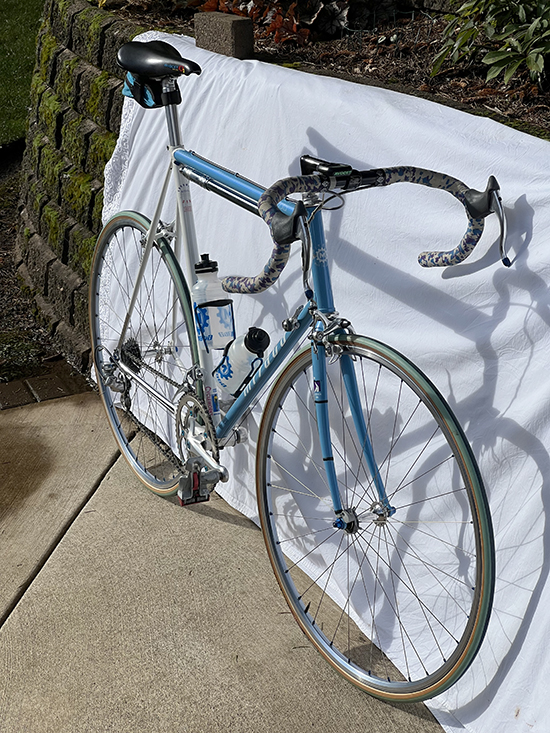
Front view
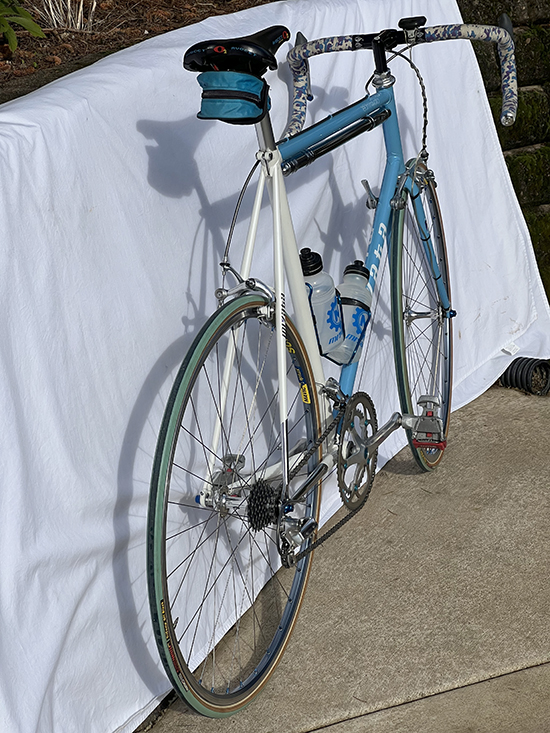
And from behind
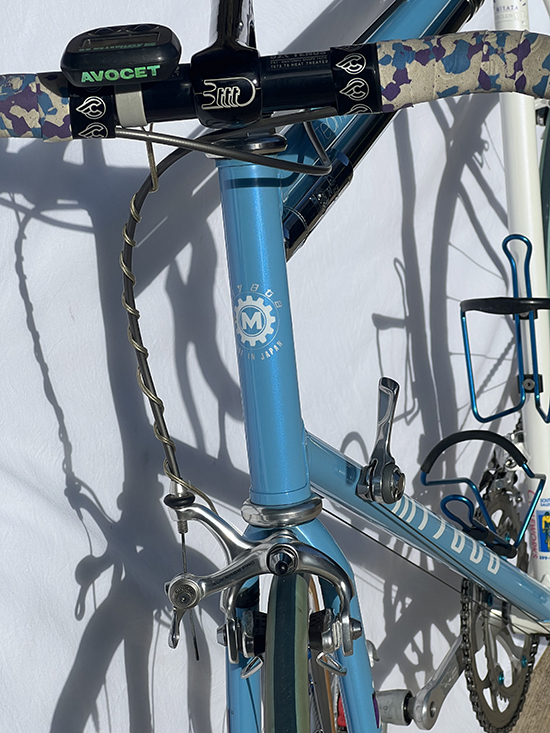
Front view close-up
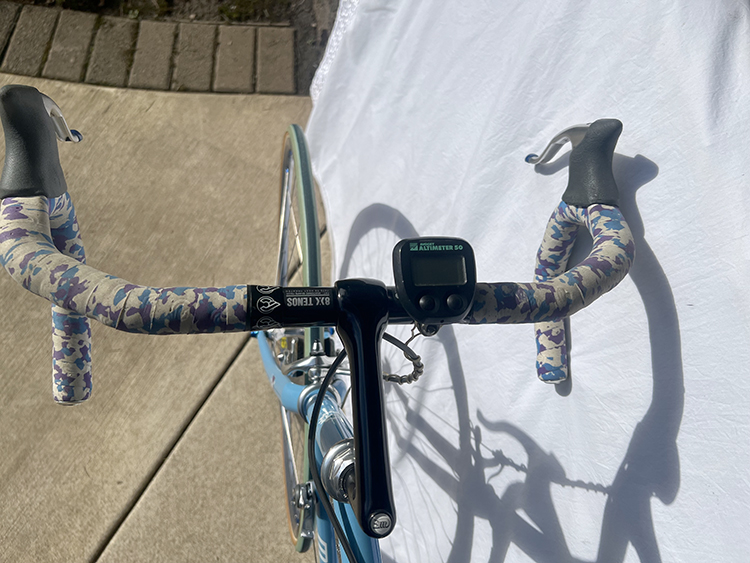
Looking straight down on the cockpit.
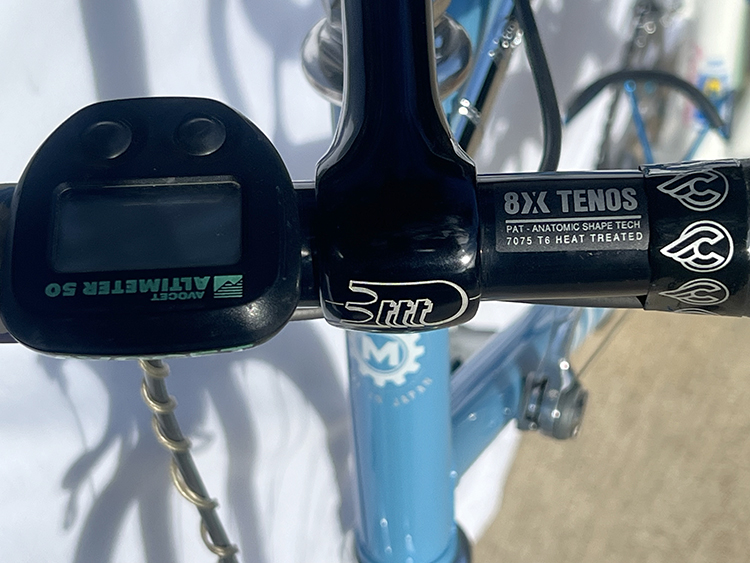
Front view really close up
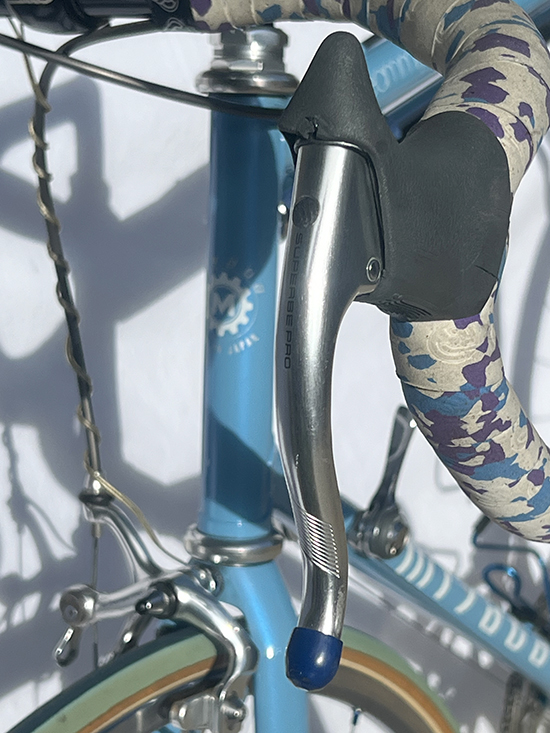
One of the SunTour Superbe aero brake levers.

Towards the front of the top tube

The SunTour Superbe downtube shifters
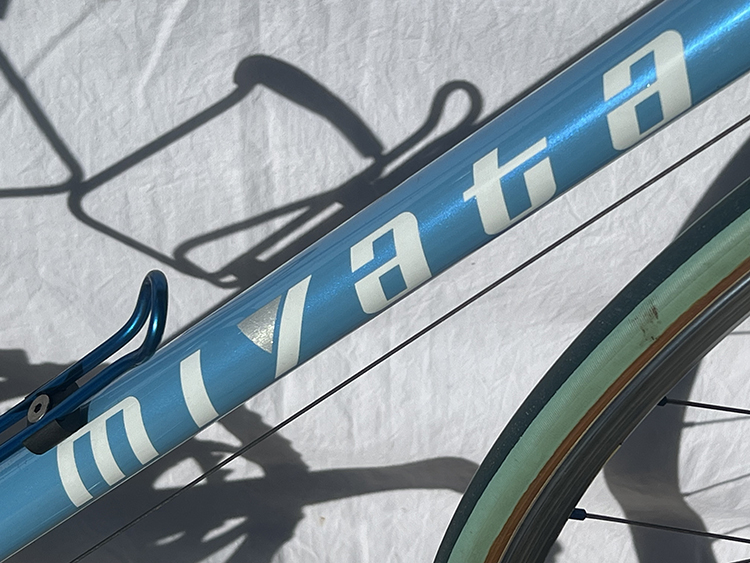
Farther down the downtube
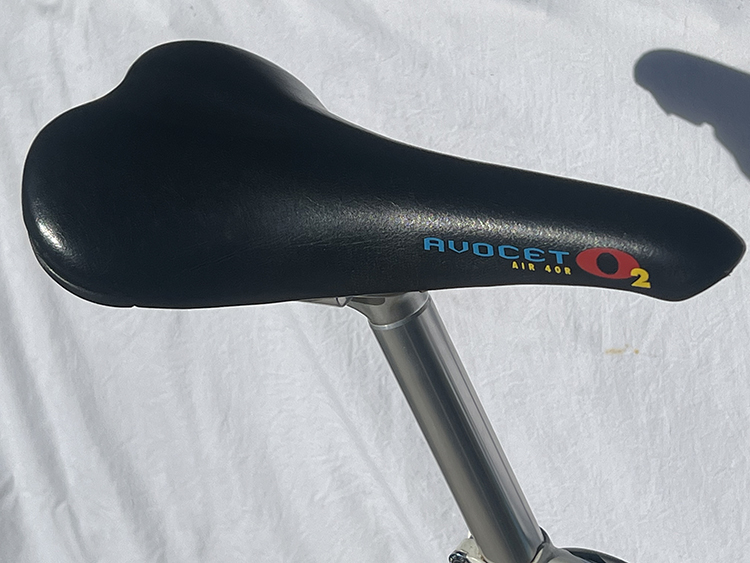
The Avocet 02 Air 40R saddle
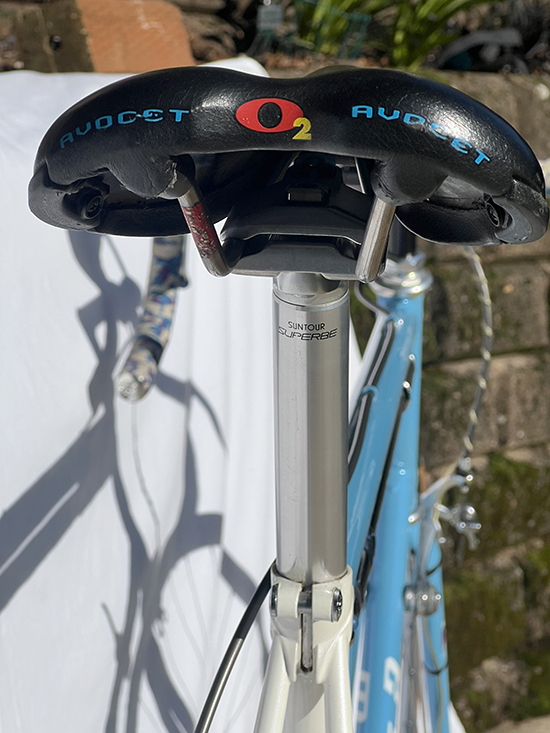
Rear viewof the saddle and seat post
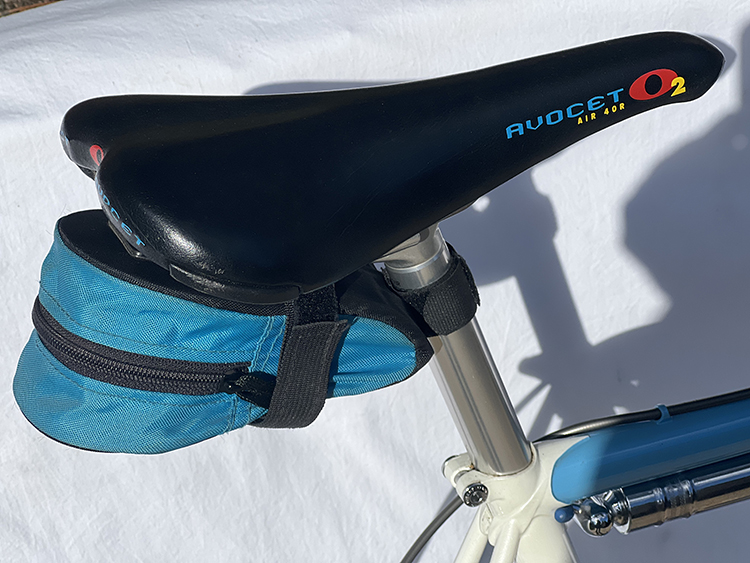
The Specialized seat bag.

Top of the seat tube showing the Cromoly splined triple-butted tubing decal the the Silca pump's Campagnolo pumphead.

The American Classic water bottle cage on the seat tube.
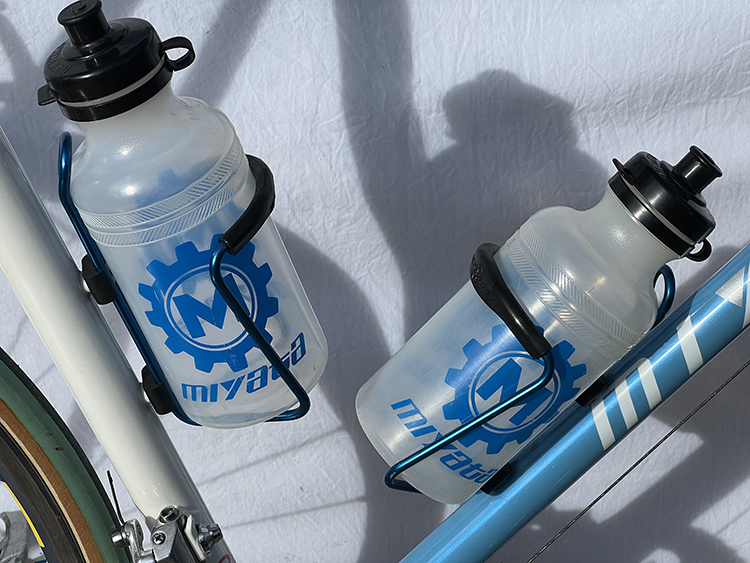
The two Team Miyata bottles
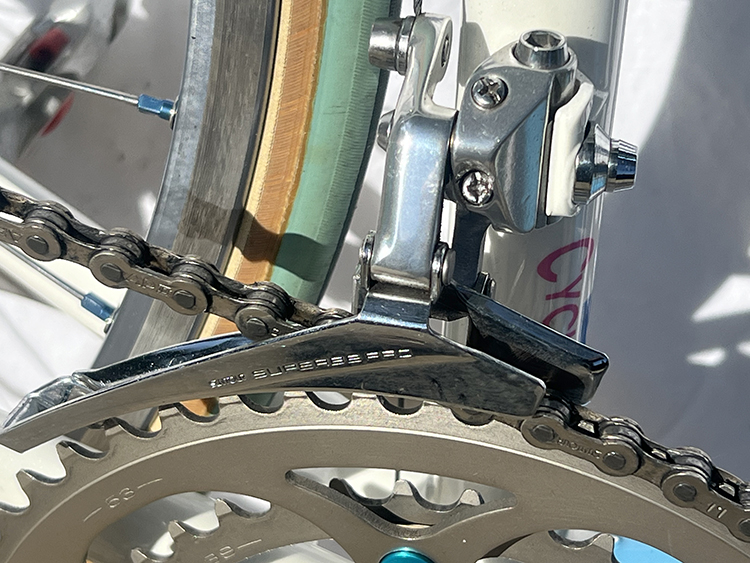
The SunTour Superbe front derailleur.
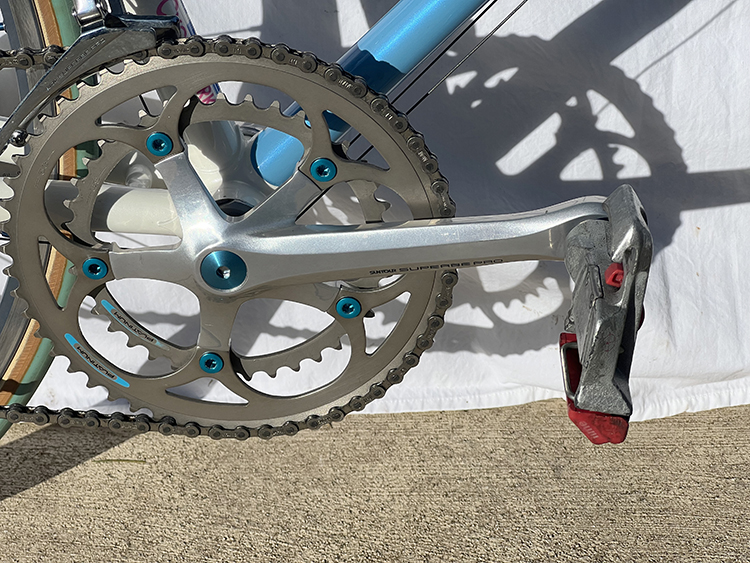
Drive side of the SunTour Superbe crankset
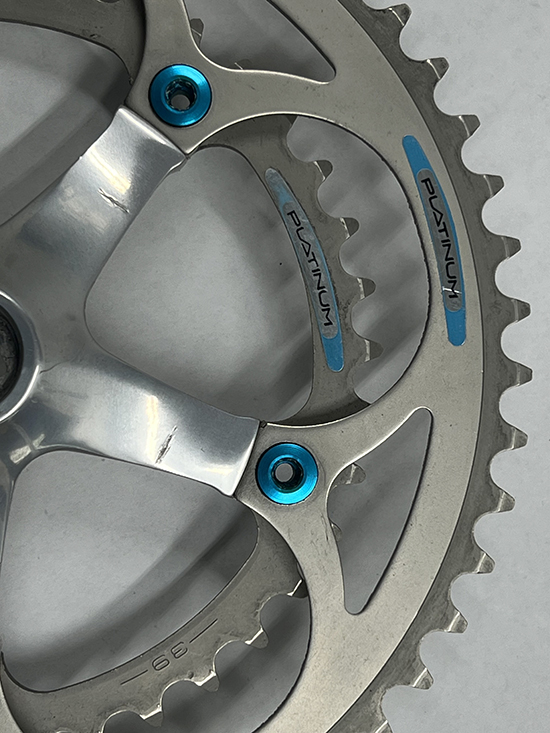
The right crank spider needed some aligning. The tool left some marks.
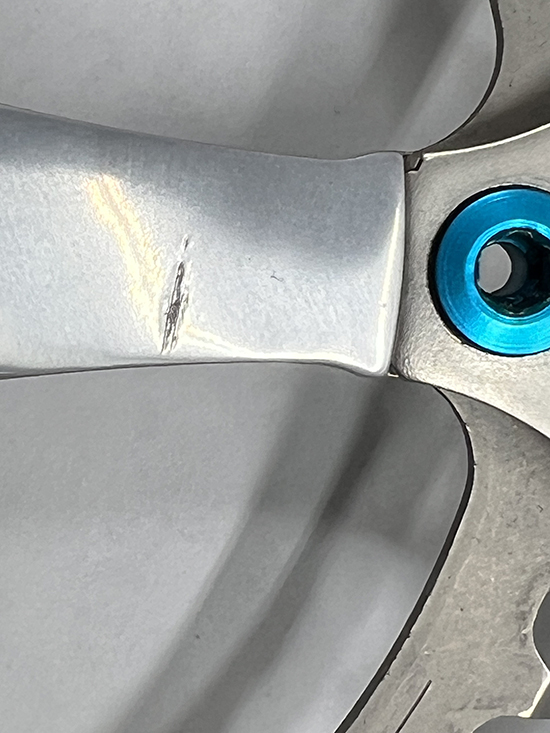
A close-up of one of the marred spider arms.
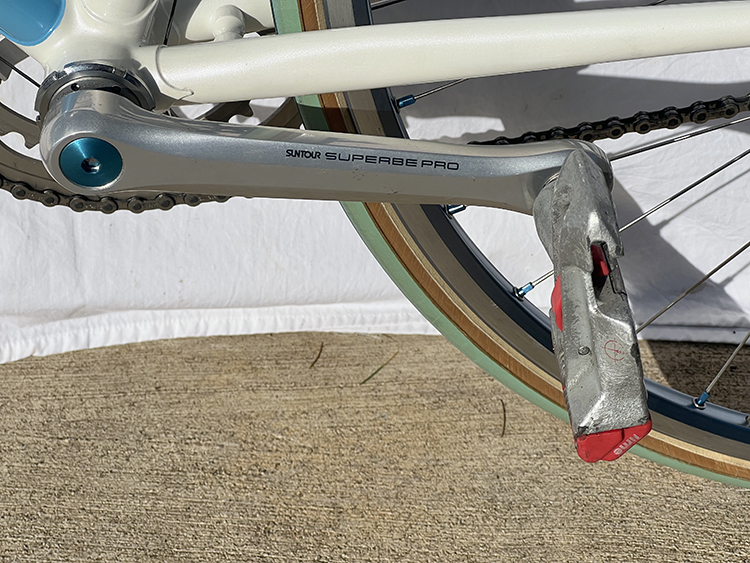
The left crank arm
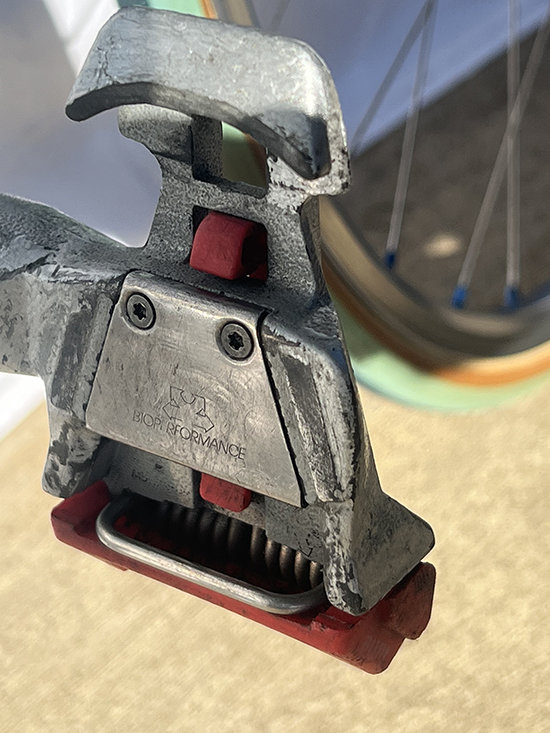
One of the bike's Time Titan Magnesium pedals.
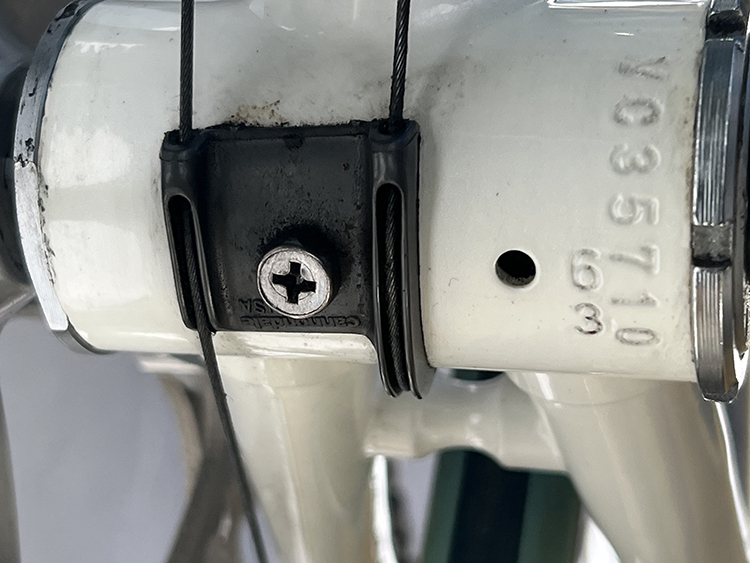
The size & serial number stamped on the bottom of the bottom bracket shell.
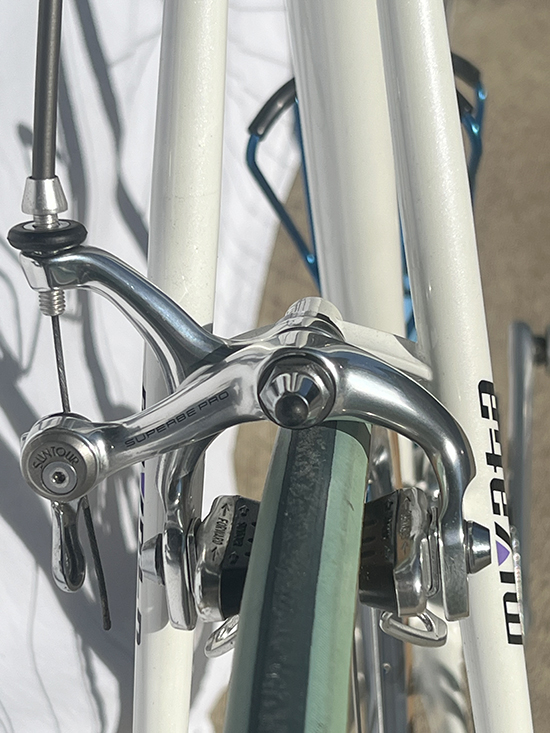
The rear brake caliper
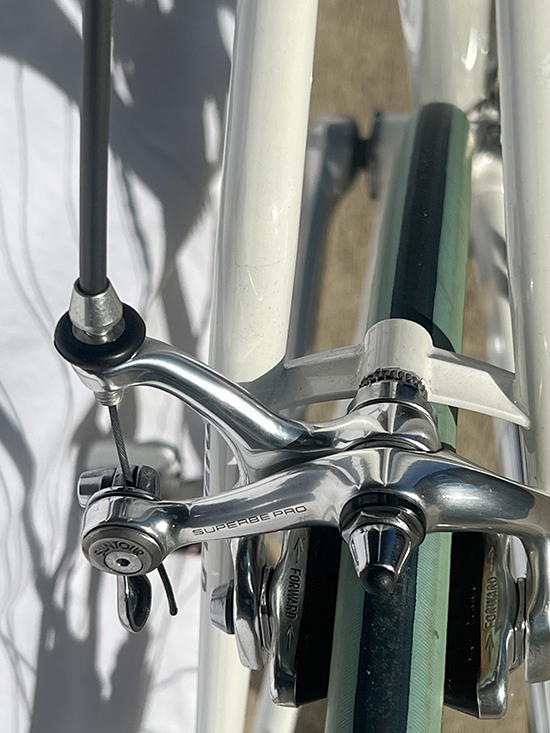
A better look at the brake bridge
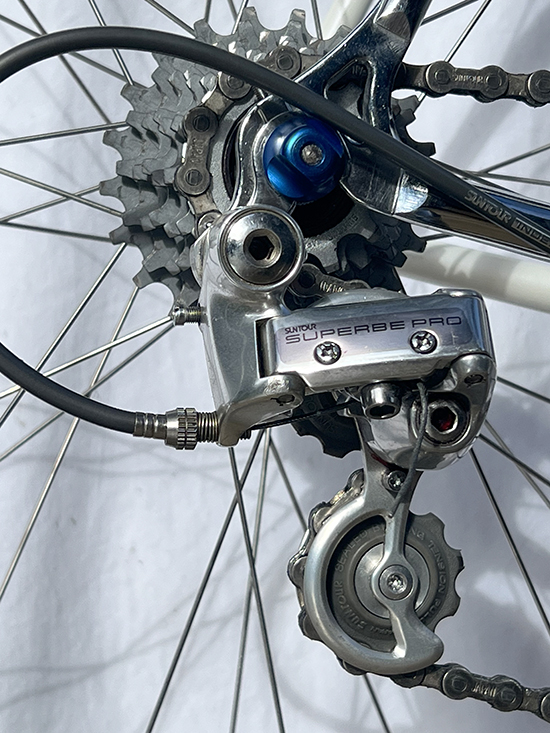
The rear SunTour Superbe Pro derailleur
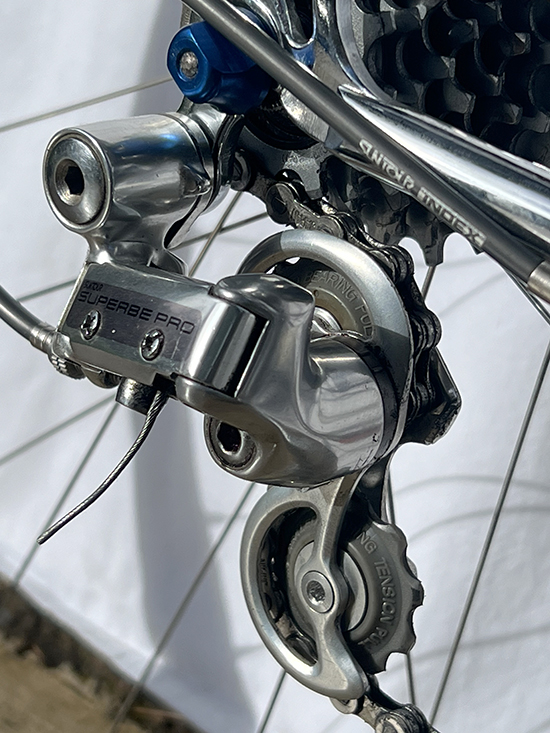
Front view of the front derailleur
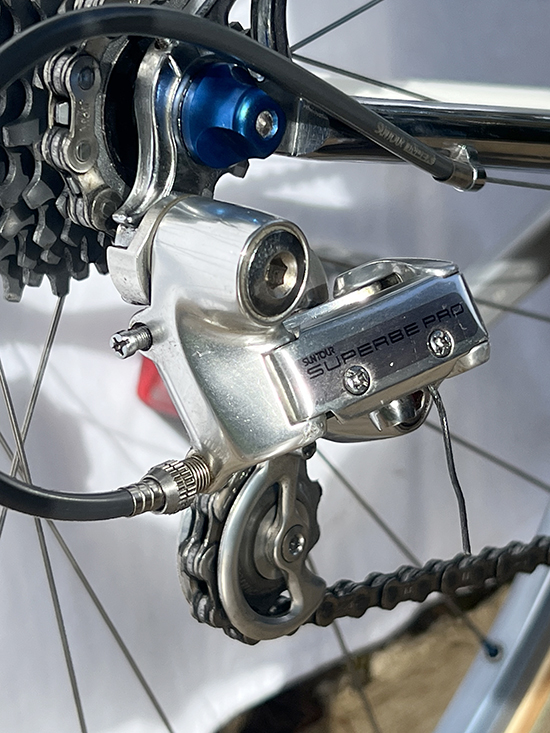
The rear derailleur from behind
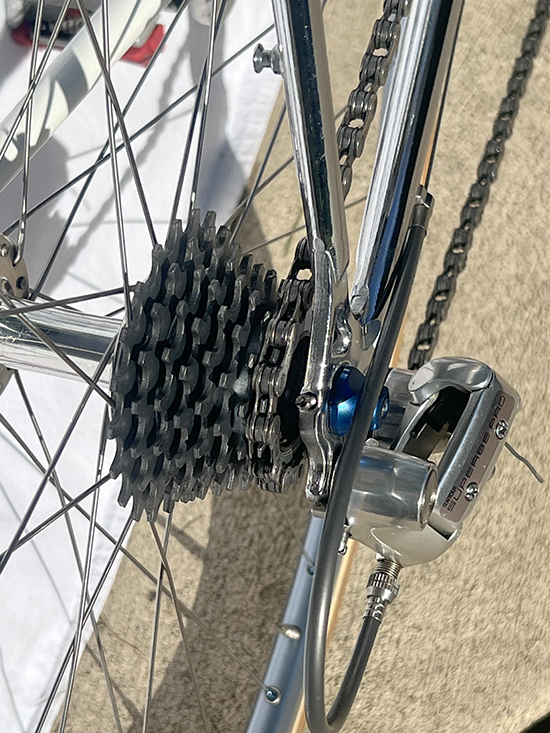
Top view of the rear cluster and rear derailleur
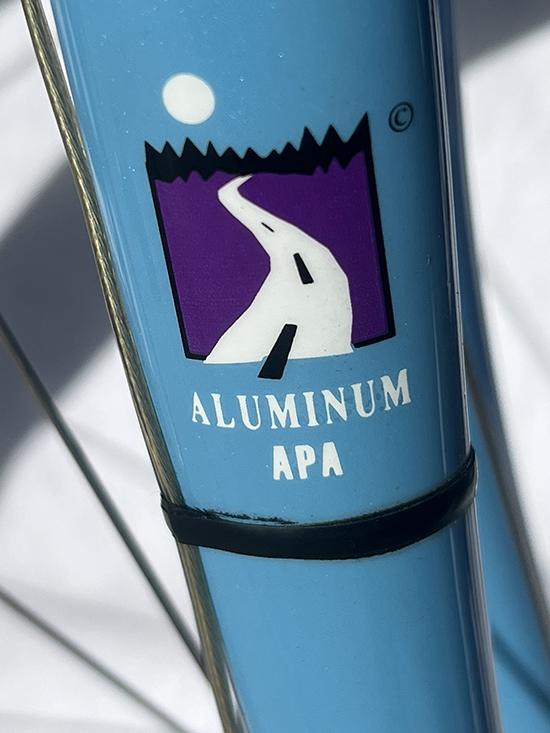
Decal on the side of the front fork

The front hub with a Control Tech Titanium skewer.
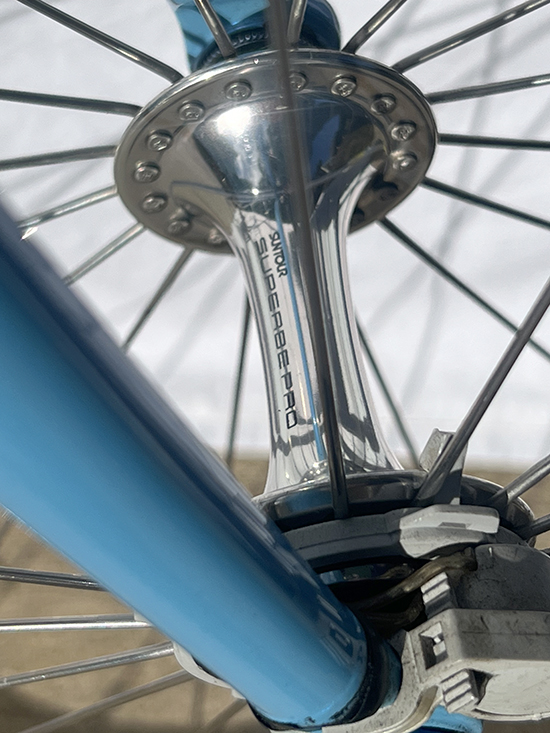
A better view of the front hub.
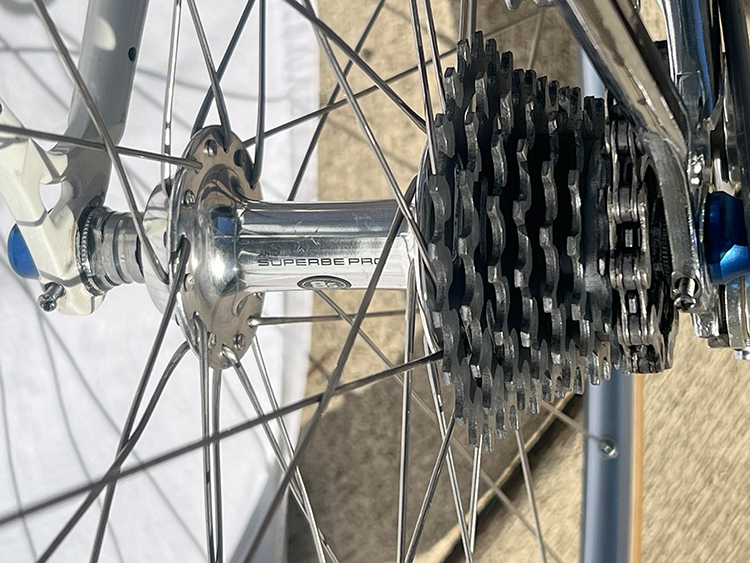
The SunTour Superbe Pro 12-21 cluster
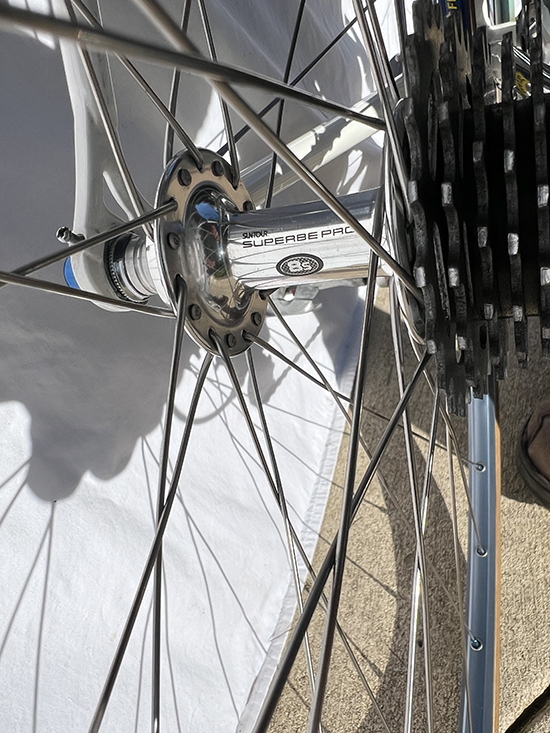
A better view of the hub

One of the Mavic Reflex blue rims.

One of the bike's Vredestein Fortezza TriComp tires. These were made in Holland.
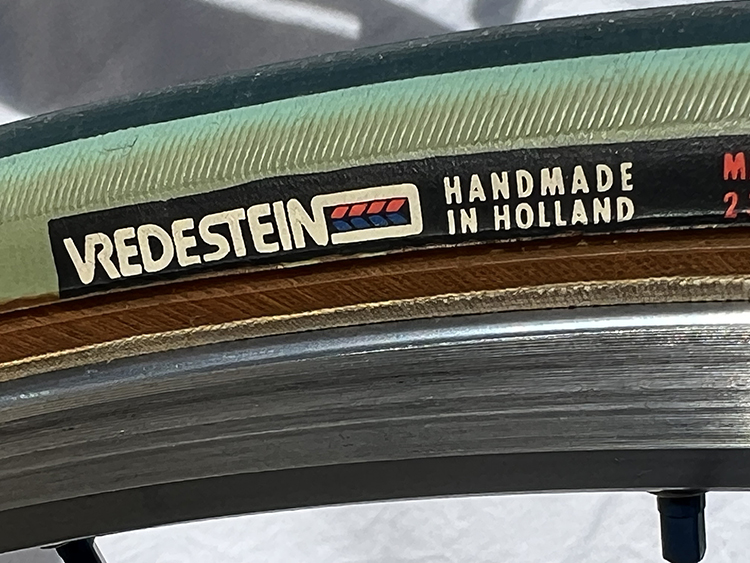
More of the label
 © 2004-2026 South Salem Cycleworks